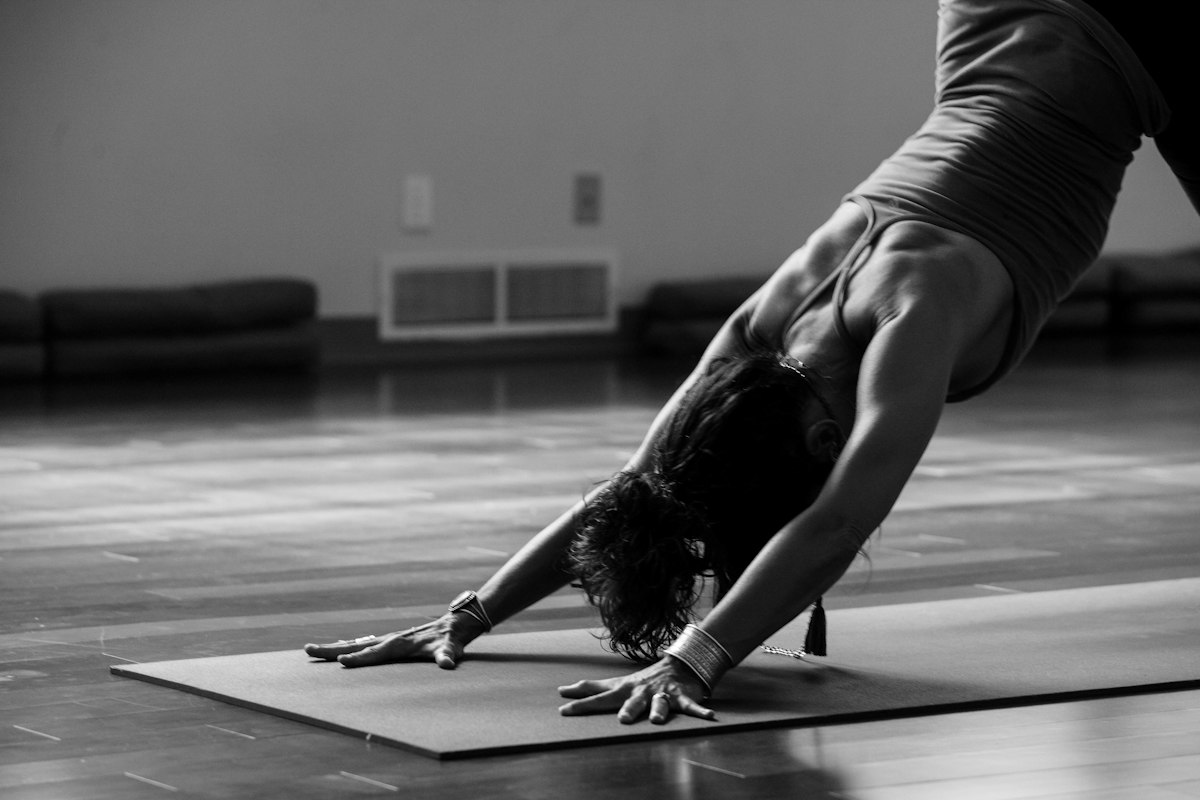
The combination of forward head posture, rounded shoulders, and prolonged stillness common to desk work produces a remarkably consistent pattern of tension — and a handful of specific, accessible poses address this pattern more effectively than generic stretching.
Why Desk Posture Creates This Specific Pattern
Hours spent looking at a screen, often with the head jutting forward and shoulders rounding inward, places sustained, low-level strain on the upper back and neck muscles that must work continuously to support this position — quite different from acute injury, this is chronic overuse from sustained postural demand.
Seated Cat-Cow at Your Desk
Even seated in a chair, gently arching and rounding the upper back and shoulders, synchronized with breath, offers genuine relief during a workday without requiring a mat or significant space — a practical micro-practice for those unable to step away for long.
Eagle Arms (Garudasana Arms)
Crossing one arm over the other at the elbows, bringing palms together if possible, creates a deep stretch across the upper back and shoulders specifically targeting the muscles overworked by rounded desk posture — genuinely effective even practiced for just 30-60 seconds per side.
Neck Rolls and Side Stretches
Slow, gentle neck rolls (avoiding forceful or fast movement) and side-to-side ear-to-shoulder stretches directly address the cervical tension that accumulates from forward head posture, best done slowly and without forcing range of motion.
Thread the Needle
From hands and knees, threading one arm underneath the body and resting the shoulder and side of the head on the floor creates a deep stretch through the upper back and shoulder specifically, addressing tension that more general stretches sometimes miss.
Why Strengthening Matters as Much as Stretching
Chronically rounded shoulders often involve not just tight chest muscles but weak upper back muscles that have stopped effectively engaging to counter the rounding. Gentle strengthening — drawing the shoulder blades together and down, against resistance or simply through conscious postural correction — addresses the weakness side of this pattern that stretching alone does not.
Building Micro-Breaks Into Your Workday
Rather than waiting for a dedicated yoga session to address desk-related tension, building brief, 2-3 minute movement breaks every hour or two — even just a few of the stretches above — prevents the tension from accumulating to the degree that requires longer remediation later.
When Tension Indicates Something More
Persistent pain, numbness, tingling, or weakness extending into the arms or hands warrants medical evaluation rather than assuming yoga alone will resolve it — these symptoms can indicate nerve involvement requiring professional assessment.
Understanding postural patterns and addressing them through targeted practice connects directly to the practical anatomy covered in our spine and asana guide, and forms part of the therapeutic application of yoga taught in our 300-hour advanced program.